Tools / Strapi
About Strapi
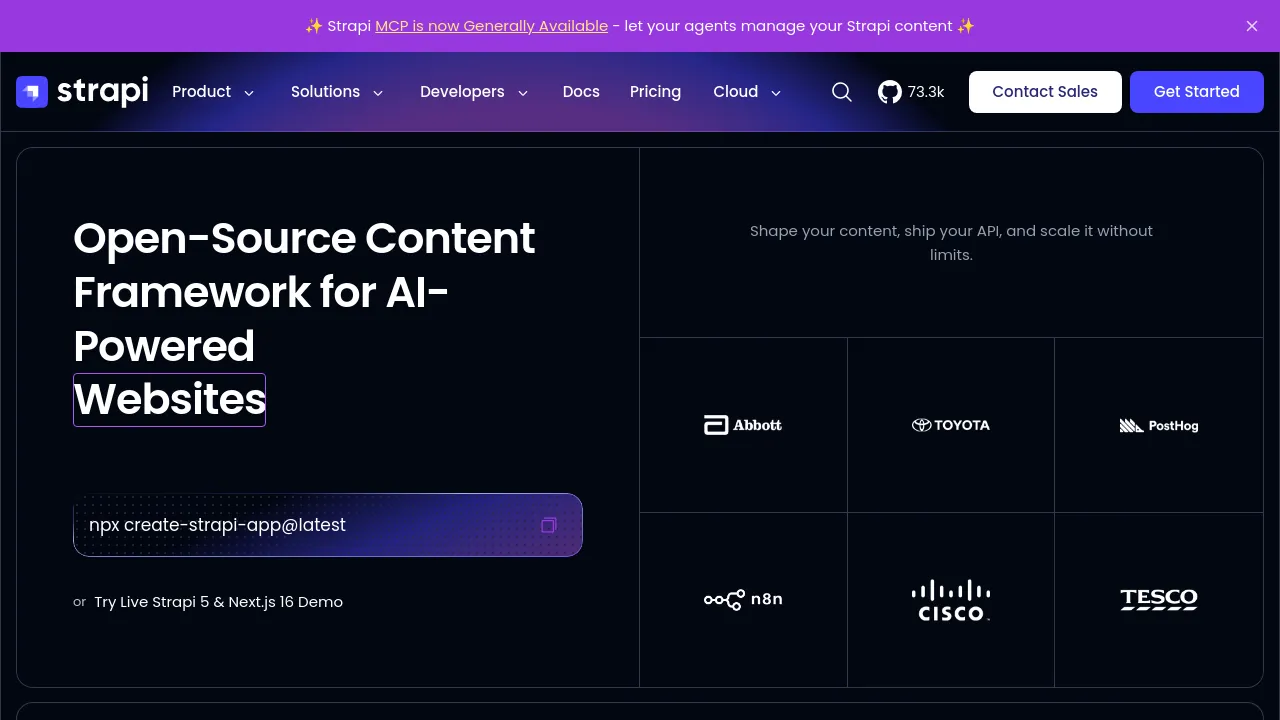
Open-source, MIT-licensed headless CMS for JavaScript and TypeScript. Design content types in a no-code builder and get typed REST and GraphQL APIs instantly.
Strapi stands out as a powerful, open-source Headless Content Management System (CMS) built on the robust foundations of JavaScript and TypeScript. Licensed under the permissive MIT license, Strapi offers unparalleled flexibility, allowing developers and content creators to decouple the content repository from the presentation layer. At its core, Strapi lets you design complex content types, define custom components, and utilize dynamic zones through an intuitive no-code builder. Once your data model is defined, Strapi automatically generates comprehensive REST and GraphQL APIs, providing a direct bridge between your content and any frontend framework, whether it's React, Next.js, or a custom application.
What truly sets Strapi apart is its nature as a full Node.js application. Unlike simpler, configuration-based CMS solutions, Strapi offers deep programmatic access. This means you are not limited to predefined settings; you can write custom controllers, implement complex services, and inject custom middleware directly into the backend logic. Furthermore, you have the freedom to reshape the entire administrative panel on the frontend to perfectly match your application's design language. With the ability to define custom fields to tailor data structures precisely and a thriving marketplace of community plugins, Strapi provides the foundational power needed for enterprise-grade applications.
Best for
- Developers seeking full control: If you need a CMS that functions as a programmable backend rather than just a content editor, Strapi's Node.js architecture is ideal.
- Complex Data Structures: Projects requiring highly customized content models, dynamic relationships, and unique data schemas.
- Modern Frontend Stacks: Applications built with Next.js, Gatsby, or other modern JavaScript frameworks that rely heavily on GraphQL or REST APIs.
- Scalable Deployments: Organizations requiring options ranging from fully managed cloud hosting to complete self-hosting for maximum data sovereignty.
Deployment Options
Strapi offers two primary paths to deployment, catering to varying needs for control, maintenance, and scale.
Strapi Cloud: For users who prefer a hands-off experience, Strapi Cloud provides fully managed hosting. This service includes essential infrastructure like PostgreSQL databases, Content Delivery Networks (CDN), and integrated email services. Deployment is straightforward, allowing you to push directly from a GitHub repository and select the region that best suits your audience.
Self-hosting: For organizations with strict compliance requirements or specific infrastructure needs, self-hosting provides complete control. You can run Strapi on your own infrastructure, ensuring full data residency and compliance. As a Node.js application, you gain the ability to scale instances, choose your preferred database, and implement advanced caching strategies at the edge, just like any custom Node.js service.
Enterprise Capabilities
Strapi is built to meet the demands of large-scale, regulated environments. It is SOC 2 certified and fully GDPR compliant. Governance is handled robustly through features such as detailed audit logs, comprehensive content history, and integrated review workflows. For large teams, built-in Single Sign-On (SSO) capabilities ensure secure access. Furthermore, enterprise-level support is available, backed by Service Level Agreements (SLAs) to guarantee uptime and rapid issue resolution.
Frequently Asked Questions
Is Strapi suitable for non-technical users?
While Strapi provides deep technical flexibility, its content management interface is designed to be highly intuitive. Content editors can manage content types, create entries, and utilize the visual builder without needing to write code. The complexity lies in the backend customization, which is handled by developers.
How does the Strapi MCP server work?
The Strapi MCP server (now generally available) is a powerful addition that integrates AI capabilities directly into the content workflow. It allows AI agents to interact with and manage your Strapi content, automating tasks like content tagging, metadata generation, and content optimization, significantly boosting productivity.
Alternatives
If Strapi's specific blend of flexibility and open-source nature isn't the perfect fit, several other CMS options cater to different needs. For professional publishing and blogging, consider Ghost. If your preference is for self-hosted, flat-file sites, Statamic and Kirby are excellent choices. For general-purpose website building with a massive ecosystem, WordPress.com remains a dominant force. Finally, for very simple, client-facing sites, Pulse CMS offers a simpler experience.

Similar to Strapi
New tools, once a week.
One weekly email with curated tools and founder insights. Unsubscribe anytime. Check our privacy policy.