Categories / Podcasting
Podcasting
A curated collection of the best recording and editing tools that podcasters use to produce episodes, plus hosting that distributes shows to podcast apps — 27 tools on Founderkit.
27 tools
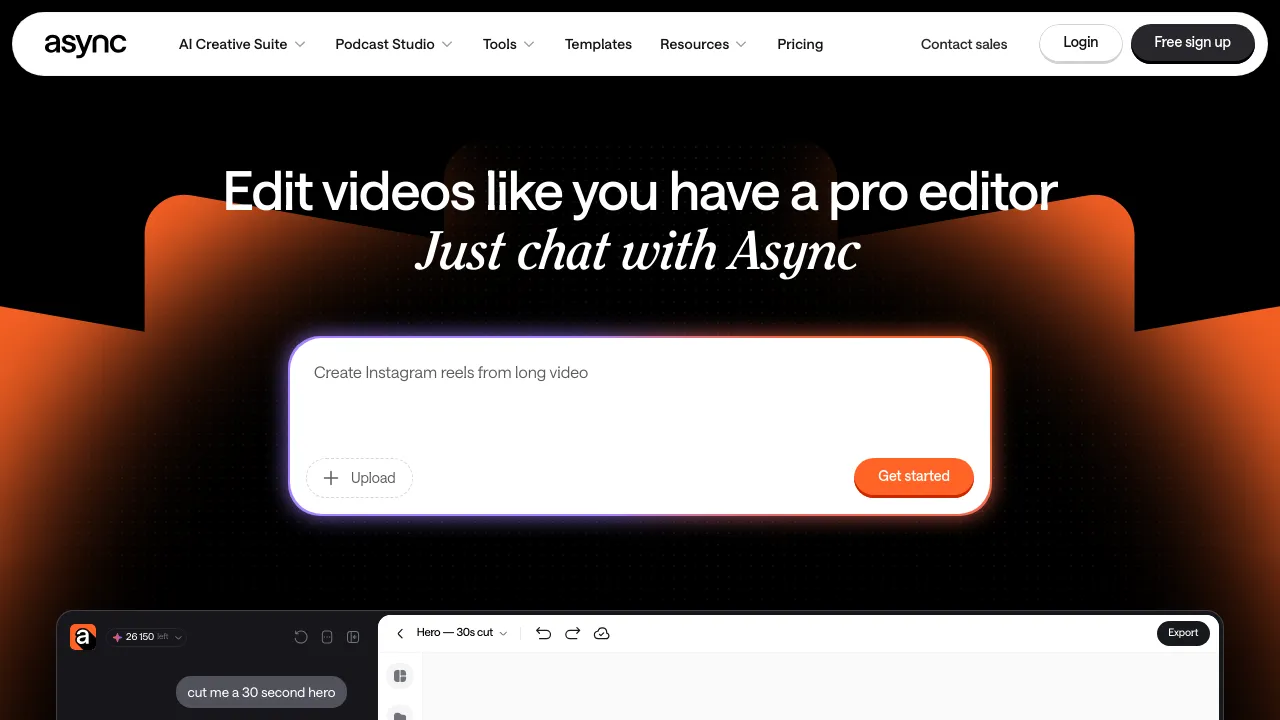
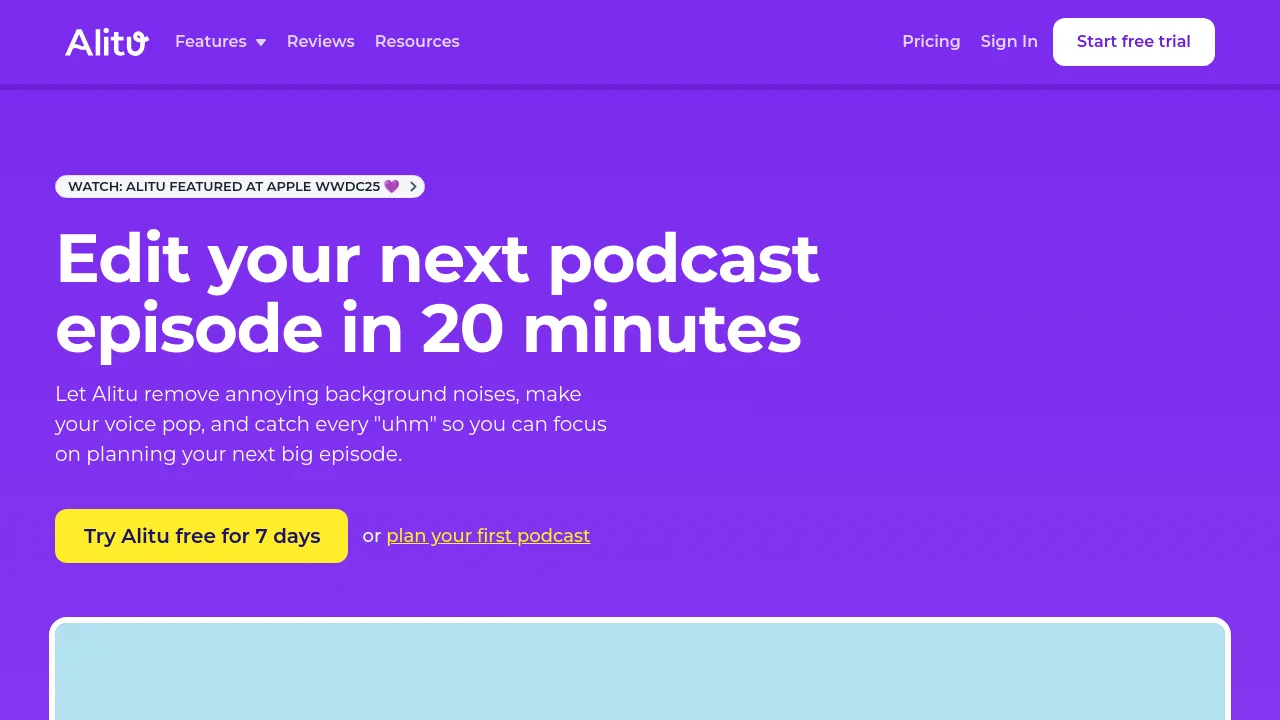
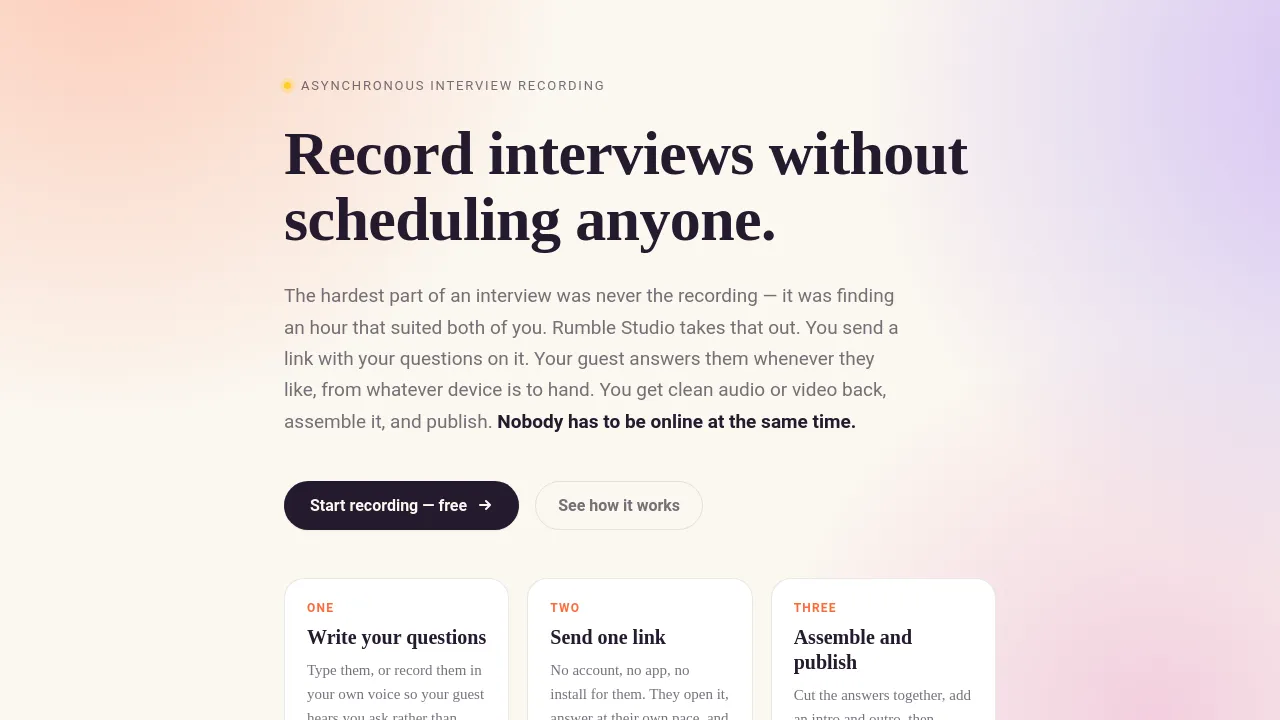
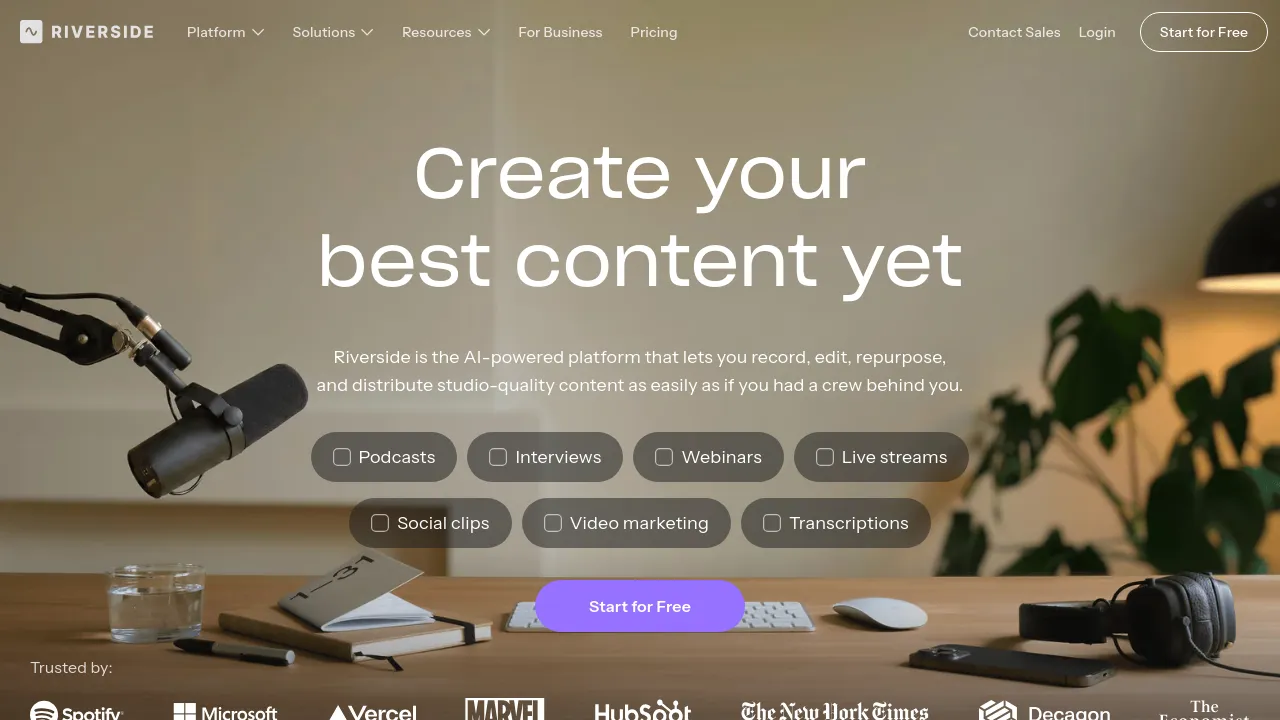

Podcasting tools cover the production chain: remote recording, AI-assisted editing, transcription, hosting and RSS feed management, and analytics. Some tools do one job — a recorder or an editor — while hosting platforms handle distribution to Apple Podcasts, Spotify, and the other directories.
Recording and editing have changed the most. Remote recording tools now capture each guest locally, which fixes the muffled-Zoom problem that plagued early podcasting. Text-based editors let you cut audio by deleting words from a transcript, which is faster and friendlier than a waveform editor for spoken content.
When choosing a host — the piece you can't skip — look at storage and episode limits per tier, whether your show and its feed survive if you leave, and what analytics it reports (downloads are the universal metric; listener location and app breakdowns vary). For the production tools, try the remote-recording quality on a real call before committing.
Frequently asked questions
- What do I actually need to start a podcast?
- A decent USB microphone, recording software, and a host that generates your RSS feed and submits it to Apple, Spotify, and the rest. Everything else — remote recording, AI cleanup, video versions — improves the product but none of it is required to ship episode one.
- What does a podcast host actually do?
- Stores your audio files, generates and updates the RSS feed that podcast apps read, serves files fast worldwide, and reports downloads. Directories like Apple Podcasts don't host your audio — they read your feed. Choosing a host is choosing who holds your show.
- Do transcription and AI editing tools actually help?
- For editing, yes — text-based editing (delete the words, delete the audio) is dramatically faster than scrubbing a waveform, and filler-word removal saves real time. Transcripts also feed SEO and accessibility. The catch: you'll still listen to the final pass for pacing.
- Can I make money from a small podcast?
- Sponsorships want scale, but a small niche show can monetize through its audience — selling your own product, paid memberships, or bonus content. Dynamic ad insertion helps larger shows; for a few hundred listeners, a podcast that drives customers to your business earns more than ads.
New tools, once a week.
One weekly email with curated tools and founder insights. Unsubscribe anytime. Check our privacy policy.